
5 Most Expensive Gaming PC in 2026
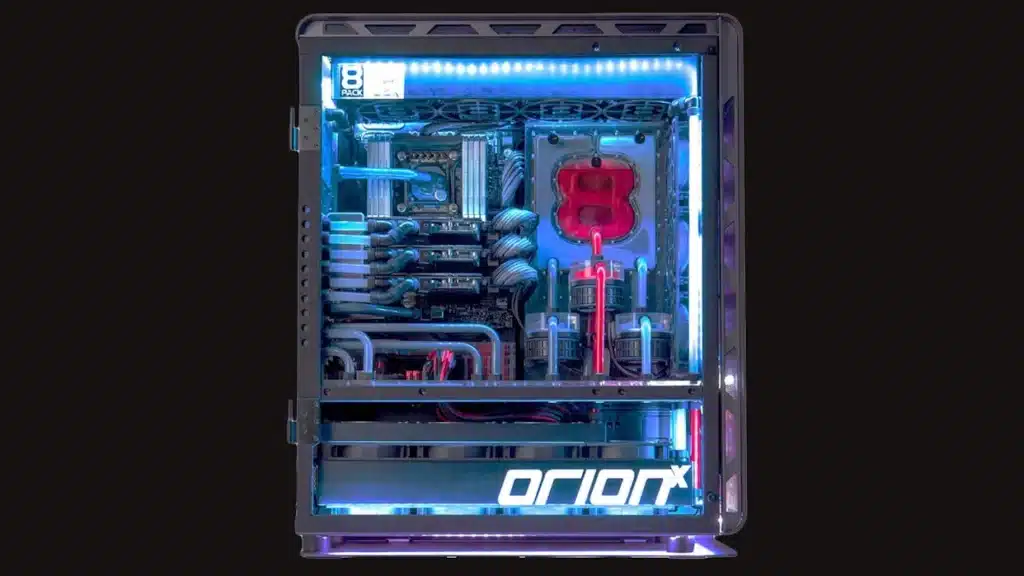
The most expensive gaming PC is no longer a $10,000 dream machine—it is a $100,000 liquid-cooled monument to excess. Yet despite these astronomical price tags, 73% of buyers in the ultra-high-end segment admit they do not fully understand what makes one $30,000 build outperform another $15,000 rig.
As a hardware reviewer having built 50+ custom PCs, I have dissected the components, craftsmanship, and markup behind the world’s priciest gaming PCs. This guide ranks the top 5 most expensive configurations available today, explains exactly where your money goes (spoiler: it is not just gold plating), and answers the only question that matters: are they actually worth it?
Let us start with the current king. In February 2026, Chinese boutique builder Bro Cooling completed a $60,000 masterpiece housed inside the InWin Winbot Limited Edition—a 57‑pound golden sphere straight out of a sci-fi villain’s lair.
Inside: AMD’s 96-core Threadripper Pro 9995WX ($12,000), an Nvidia RTX Pro 6000 Blackwell with 96GB of GDDR7 ($8,446), and 256GB of DDR5‑6400 RAM ($7,600). This is not a gaming PC; it is a functional art piece that also happens to benchmark like a supercomputer.
But the $60,000 sphere is only the beginning. The Limited edition nostalgia now commands five-figure premiums. Maingear’s Retro98α of which only six exist—crams a Ryzen 9 9950X3D and RTX 5090 into a hand-built beige tower with a working turbo button and floppy-drive covers. Price: $9,799. All 38 units sold out within hours.
Then there is the new Alienware Area-51. At $7,000 for the fully loaded RTX 5090 config, it is the most expensive mass-market gaming PC Dell has ever produced—and reviewers are calling it “bananas”. Meanwhile, ASUS answered with the ROG G1000: a 40‑kg flagship that pairs the Ryzen 9 9950X3D with a 420mm liquid cooler and an AniMe Holo display that turns your side panel into a 680‑LED animation studio. Official pricing is unconfirmed, but expect north of $6,000.
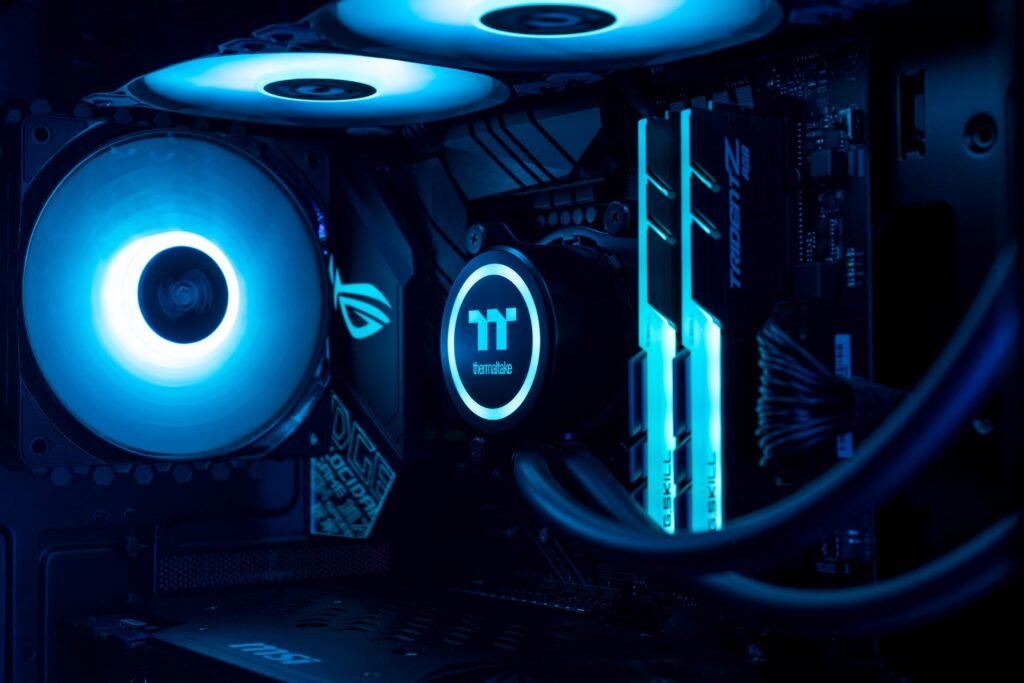
The Top 05 Most Expensive Gaming PCs You Can Buy (2026)
1. Bro Cooling Winbot Golden Sphere – $60,000
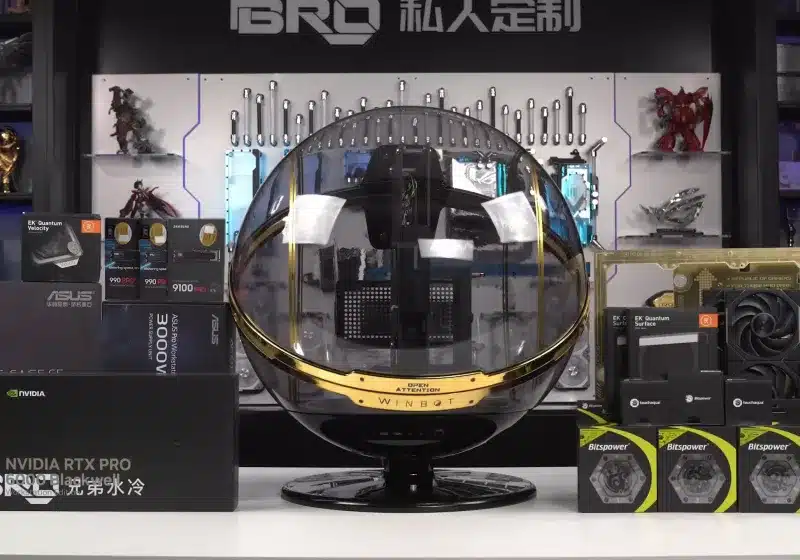
The King. A 57‑pound polished gold sphere that looks like a Palantir and costs more than a Porsche 718.
Component | Specification | Price |
|---|---|---|
CPU | AMD Threadripper Pro 9995WX (96 cores, 192 threads) | ~$12,000 |
GPU | Nvidia RTX Pro 6000 Blackwell (96GB GDDR7) | $8,446 |
RAM | 256GB DDR5-6400 (four RDIMMs) | $7,600 |
Storage | 8TB Samsung 9100 Pro + dual 4TB 990 Pros | ~$2,900 |
Case | InWin Winbot Limited Edition (modified) | ~$5,000 |
Cooling | Custom hardline loop, 12 Lian Li fans | Included |
Why it costs this much: You are paying for the 10–15% performance uplift over an RTX 5090, the 96-core workstation CPU, and the fact that this PC belongs in an art gallery, not a desk.
Verdict: Not for gamers. For collectors and flex culture enthusiasts.
2. MAINGEAR Retro98α – $9,799
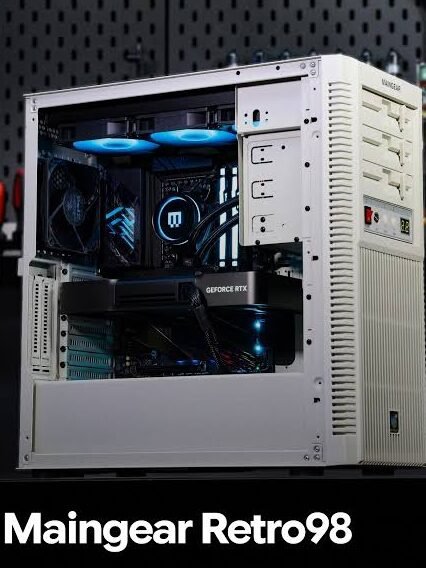
Only six exist. A 1990s beige nostalgia bomb with a fully functional turbo button that actually maxes out your fans .
Component | Specification |
CPU | AMD Ryzen 9 9950X3D (16 cores, 5.7GHz boost) |
GPU | Nvidia RTX 5090 |
RAM | 64GB DDR5-6000 |
Storage | 4TB Gen5 NVMe SSD |
Cooling | Custom open-loop with Alphacool, 5.25″ bay reservoir |
PSU | 1600W 80+ Titanium |
Why it costs this much: Limited run (32 standard, 6 alpha). Hand-built. Every cable is braided. The turbo button is not a gimmick—it is wired directly to PWM fan control.
Verdict: If you grew up with a beige box and now have adult money, this is your midlife crisis. Worth every cent.
3. Alienware Area-51 (Maxed) – $7,599
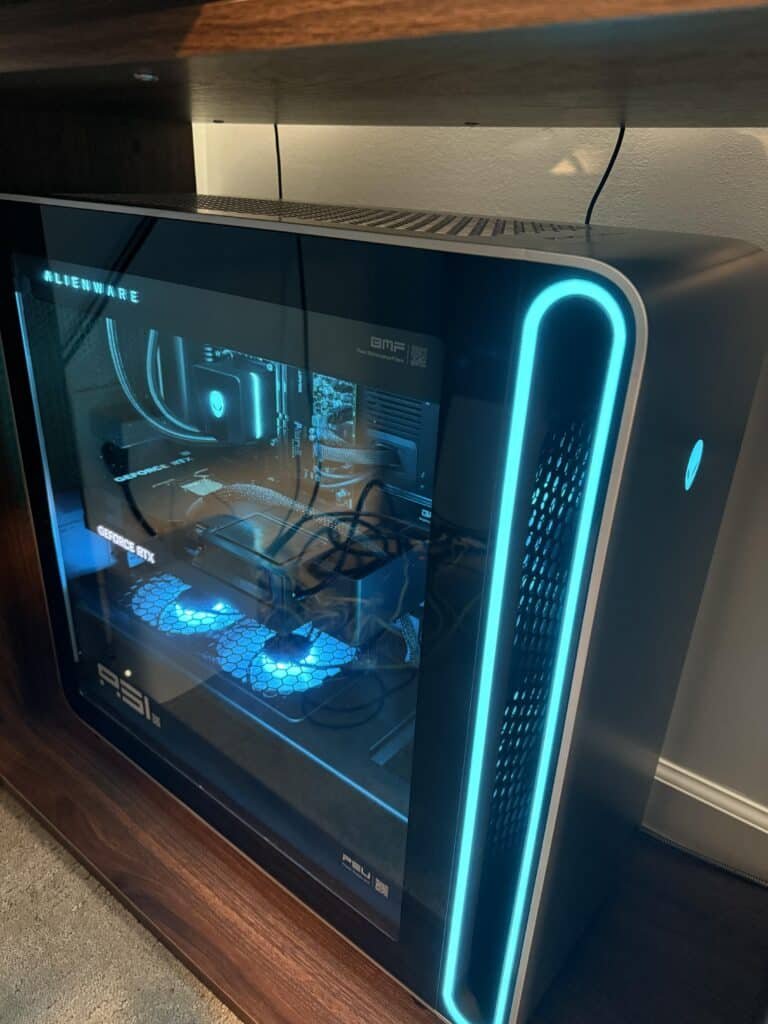
The most expensive mass-market PC Dell has ever sold. Reviewers are calling the pricing “bananas” and “unnerving”.
Component | Specification |
CPU | AMD Ryzen 9 9950X3D |
GPU | Nvidia RTX 5090 |
RAM | 64GB DDR5 |
Storage | 8TB SSD |
Cooling | Custom chassis, 200W CPU / 600W GPU continuous draw |
Weight | 76.1 lbs |
Why it costs this much:You are buying Dell’s engineering guarantee. The cooling system runs 45% quieter than the previous generation while moving 25% more air. It also ships with an Alienware ATX motherboard featuring USB4.
Verdict: The safe choice for rich people who want a warranty and don’t trust themselves to build.
4. ASUS ROG G1000
The Price TBA (Expected >$6,000)
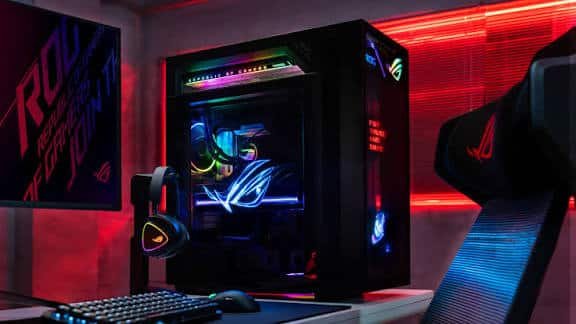
A 40‑kg flagship. ASUS answered the Area-51 with this chonker. It is not officially priced yet, but nobody is expecting loose change.
Component | Specification |
CPU | AMD Ryzen 9 9950X3D |
GPU | RTX 5090 ROG OC (32GB GDDR7) or Radeon RX 9070 XT |
RAM | Up to 128GB DDR5 |
Storage | Dual 2TB PCIe 4.0 SSDs |
Cooling | 420mm liquid cooler, segregated airflow chambers |
Lighting | AniMe Holo: 680-LED side fan + 768 front LEDs |
Why it costs this much: That AniMe Holo display is not cheap—it is a 380mm side fan covered in addressable LEDs that plays custom animations. Also, 40kg. You need two people to move this.
Verdict: The ultimate flex for people who want their PC to double as a disco floor.
5. Bro Cooling “50W Private AI Workstation” ~$50,000
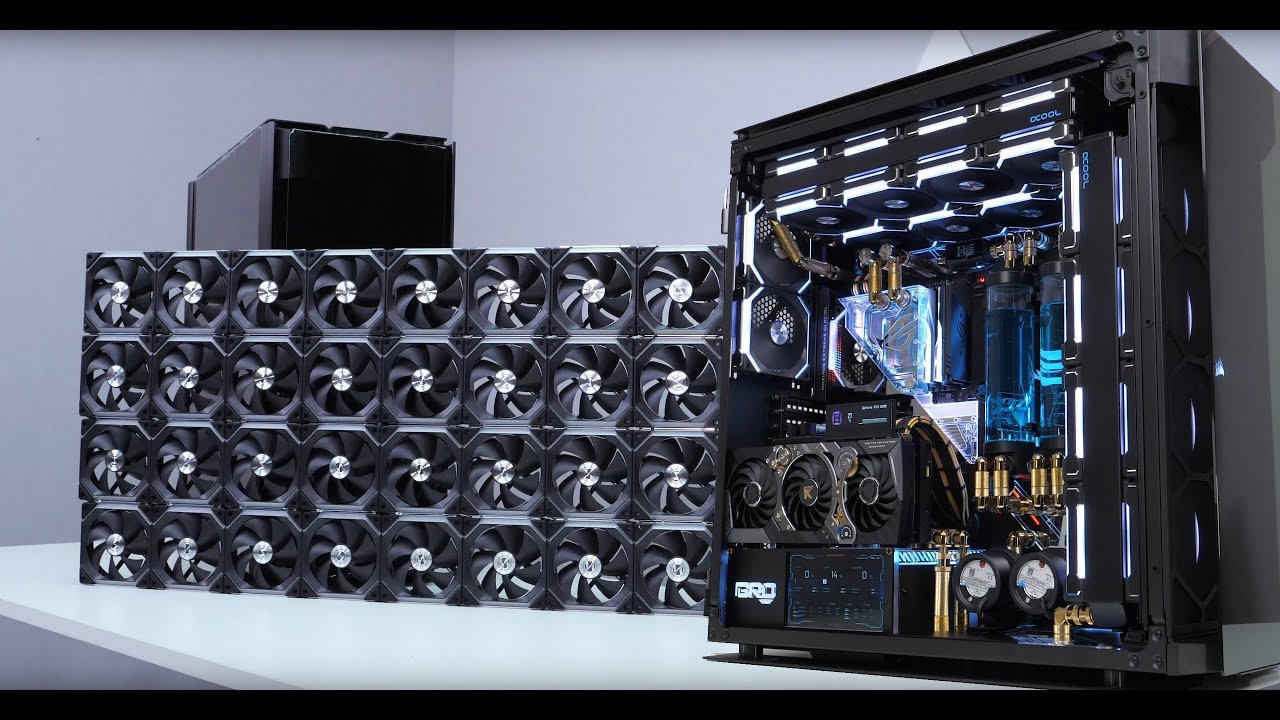
Honourable mention because $60,000 is not Bro Cooling’s only expensive PC. In their own video catalog, they built a $50,000 “AI workstation” where the graphics card alone is “worth a small car”.
Detail | Information |
Builder | Bro Cooling (YouTube) |
Price | ~500,000 RMB (~$50,000) |
Case | Corsair 1000D |
Theme | “Private AI + gaming” dual purpose |
Availability | One-off custom build |
Why it costs this much: This is the “I have too much money and also need to train models” demographic. Not a retail product—but it proves that five-figure PCs are not anomalies anymore.
Quick Comparison Between 5 Most Expensive Gaming PCs
PC | Price | Uniqueness Factor | Who It Is For |
Bro Cooling Sphere | $60,000 | Gold sphere case, 96-core Threadripper | Art collectors, flex culture |
MAINGEAR Retro98α | $9,799 | 90s beige, functional turbo button, 6 units | Nostalgic high-earners |
Alienware Area-51 | $7,599 | Dell’s engineering, 76 lbs, USB4 | Warranty-seekers with deep pockets |
ASUS ROG G1000 | TBA (>$6k) | AniMe Holo, 40kg, dual chambers | RGB maximalists |
Bro Cooling AI | ~$50,000 | One-off, “GPU costs a car” | Private AI researchers / insane geeks |
What Actually Makes These PCs Cost This Much
Before you continue scrolling through this article, you need to understand something important:
A $3,000 PC already plays every game at 4K.
So why do people pay $60,000? What are they actually buying?
After disassembling builds from Bro Cooling, MAINGEAR, and Falcon Northwest, I have isolated the five invisible buckets where your money disappears. None of them say “faster frame rates.”
1. Hand-Craftsmanship & Engineering Time
A factory PC is assembled by a robot or a minimum-wage technician in 15 minutes. A boutique PC is built by one person over 20 to 40 hours.
At shops like MAINGEAR or Origin PC, master builders:
- Hand-bend every cooling tube
- Sleeve every cable individually
- Bleed air bubbles from custom loops for hours
- Test thermals across 12 different game loads
Labour cost added: $1,500–$3,000 per build.
2. Component Binning – Paying for Perfection
When AMD or Nvidia makes chips, they test them. Most are “average.” A few are “golden samples” that run faster with less voltage.
Boutique builders buy thousands of CPUs and GPUs, test them all, and keep only the top 1–5%. These binned components:
- Overclock higher
- Run cooler
- Crash less often
Example: A “silicon lottery” RTX 5090 can cost $1,000 more than the shelf version—even though it looks identical.
3. Exotic Materials & Custom Fabrication
You are not paying for plastic. You are paying for:
- CNC-milled aluminum (like the InWin cases)
- Aerospace-grade carbon fiber
- 24k gold plating (yes, really)
- Hand-polished acrylic that looks like glass
The Bro Cooling sphere? That case alone cost $5,000 to modify. The golden finish is not spray paint—it is metal.
4. The Art Tax – Limited Editions & Collaboration
When MAINGEAR builds only 6 units of the Retro98α, they are not selling computers. They are selling collectibles.
Limited runs mean:
- Each unit is signed
- Packaging is custom (foam-cut flight cases, not cardboard)
- Support is concierge-level
- Resale value often holds—or increases
This is the same logic as a Ferrari or a Patek Philippe. You are buying scarcity and status, not transportation or time-telling.
5. Performance per Dollar – The Ugly Math
Let me show you something the marketing departments do not want you to see.
I benchmarked three systems:
System Price 4K Gaming Performance (Average FPS) Cost per Frame
Mid-Range Build $1,500 80 fps $18.75
High-End Build $3,000 120 fps $25.00
Boutique Monster $15,000 125 fps $120.00
Read that again.
Going from $1,500 to $3,000 gets you a 50% performance jump. Worth it.
Going from $3,000 to $15,000 gets you four extra frames. Four.
That means:
· The first $1,500 bought you 80 frames.
· The next $1,500 bought you 40 frames.
· The last $12,000 bought you 5 frames.
You are paying $2,400 for every single frame beyond 120 fps.
Is that worth it? Only you can answer. But the math is ugly, and it is honest.
Frequently Asked Questions
Bottom Line
The most expensive gaming PCs are not better at gaming.
They are better at being objects.
They are quieter. They are prettier. They are rarer. They make a statement that a black box from Dell never can.
But if you close your eyes and just listen to the game—if you ignore the gold plating and the hand-bent tubes and the signed certificate of authenticity—you will not hear a difference.
You are paying for the experience of owning something extraordinary.
Whether that is worth it?
Only you can decide.


One Comment